

The first computer in my house was a Tandy 1000. It was made by RadioShack and it was the coolest thing I had ever seen. Sure, it was not much to look at with its light brown plastic case and monochrome screen. I am pretty sure my calculator from middle school has more processing power. The laptop I am typing on right now is basically a supercomputer when put up against that Tandy, but it got the job done.
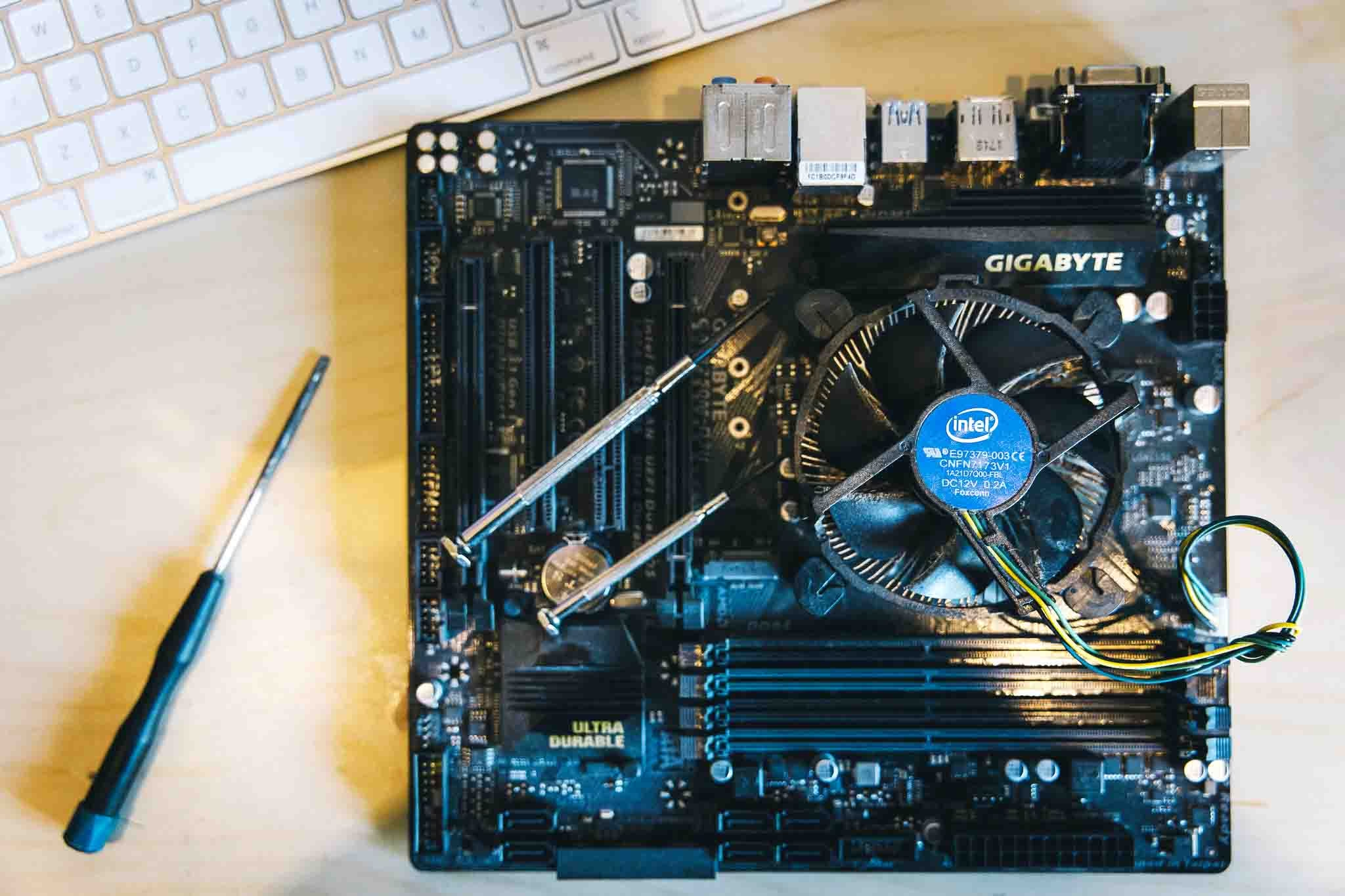
My dad used it for his business bookkeeping, and it worked for that. Until something broke. Once, it was a failed hard drive that taught him the need for backups. Another time it was a small battery that needed to be replaced. In both cases, he removed four screws, opened up the case and followed along with what the support rep on the phone told him to do.
The hard drive in my laptop today is a monstrous 512 gigabyte solid state drive compared to the Tandy’s 10 megabyte drive. Though my laptop’s drive does have more storage (which I use for a decades-old collection of animated GIFs), it has one big fault. If the drive fails, there is nothing I can do other than taking it to the Apple Store.
Sure, there are eight screws that I could undo—if I had the right tool. Apple, like many hardware manufacturers, uses five-pointed tamper-proof pentalobe screws.
Even if I had the right tool, opening up the laptop would be a dead end. The hard drive is soldered to the motherboard and cannot be replaced.
It is not just laptops that have these problems.
Unlike older internal combustion powered vehicles, electric vehicles often have sealed systems that only authorized technicians can repair. Modern appliances like dishwashers, washing machines and clothes dryers rely on integrated circuit boards that often cost more to repair than replacing the entire appliance. AirPods and other wireless headphones have built-in batteries that cannot be replaced, which means they end up in landfills with tons of other irreparable electronics.
Whether it is proprietary parts or software, built-in obsolescence or a threat of a voided warranty, more and more devices are becoming irreparable. Thankfully, people are standing up to the corporations and fighting for our rights to repair the devices, appliances and vehicles we have purchased.
The first right to repair act in the United States was passed in Massachusetts in 2012, but it never became a law. In 2022, Colorado passed a law giving owners the right to repair their motorized wheelchairs. That same year, New York was the first state to enact a law protecting the right to repair consumer electronics.
In Canada, Bill C-244 passed royal assent in 2024 to improve our rights to repair. This bill amended the Copyright Act to lift prohibitions on circumventing manufacturer’s’ protections to repair a device. In Quebec, the government passed Bill 29 to protect consumers from planned obsolescence—the design of a product to reduce its lifetime.
While these legislations might not help me change the drive in my laptop, they are helping create a future where any of us can grab a screwdriver and some duct tape, and fix things ourselves. If you want to get a headstart today, you can fight for your right to repair at events with Red Raccoon Bike Rescue, Kwartzlab and 4RepairKW.

Leave a Reply