
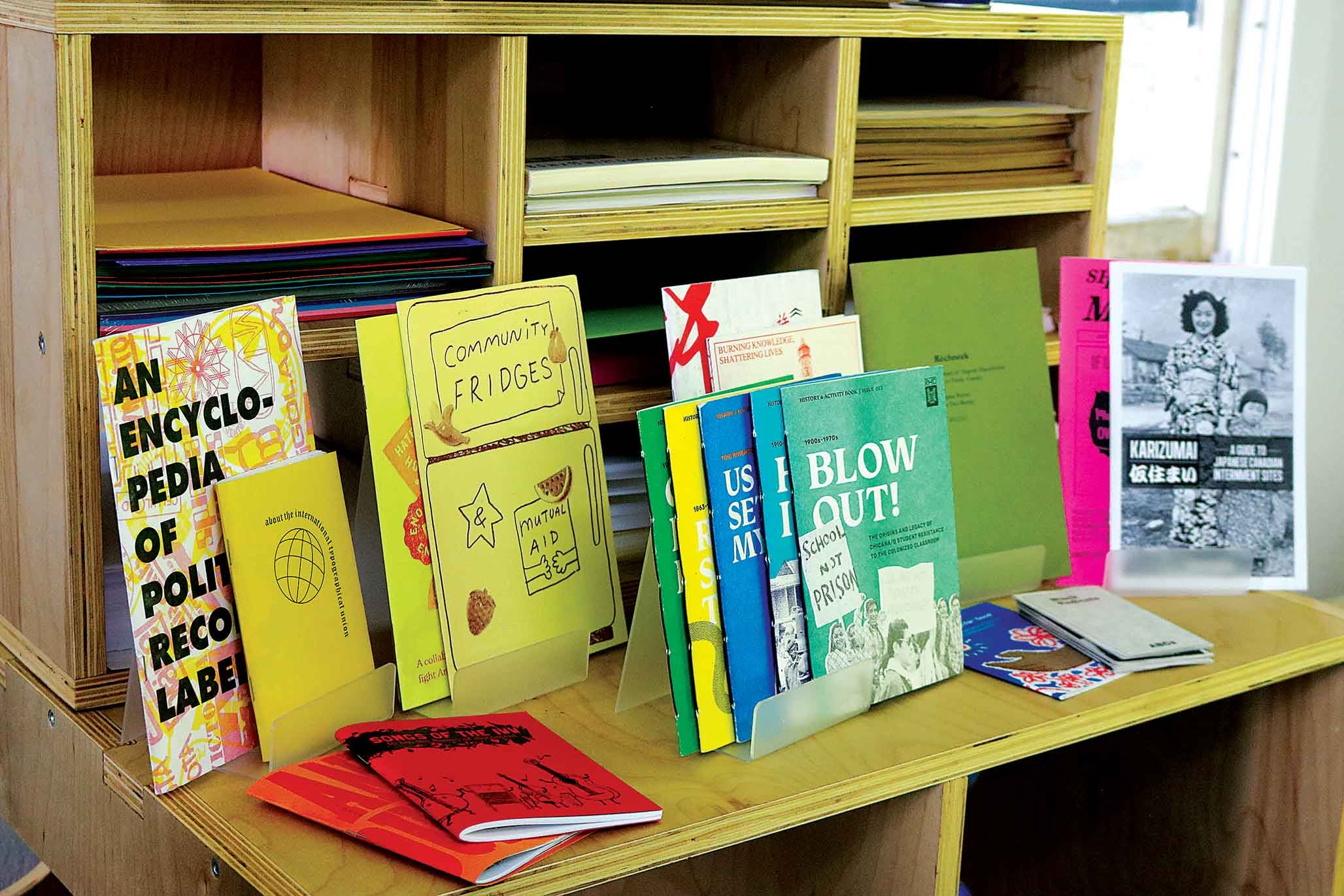
“I have been making zines for most of my life. I started making zines when I was 14. And I’ve always been really passionate about the political aspect of zines,” Drmay said.
“It’s one of the best ways that you can spread information and connect with people on various political topics and get people involved. And so, when I saw that folks were literally going to jail for this, it just really felt not cool … Having folks get multi-year sentences, multi-decade sentences just for having zines is just truly absurd.”
Drmay also spoke on the nature of independent physical publishing compared to digital platforms.
“To me, print is always political,” Drmay said.
“One of the benefits of physical media is that you are circumventing the ability for other places to shut you down or censor what you’re saying … Producing something completely physical or focusing on physical media really helps people move away from those platforms and consider what it looks like to make things kind of outside of those spaces.”
“A turning point in my life making zines was collaborating on one with my mother and our family. Together we created a dictionary of her Macedonian dialect, which was oppressed by Greece for over a century,” Bursey said.
“Our dictionary was a testament to the power of print to prove one’s existence, provide a record, correct historic wrongs, and practice intergenerational healing.”
Bursey’s talk outlined several historical examples, including the 1872 Ontario Workingmen newspaper published during the Nine Hours Movement, Black-led periodicals like Fire!! during the 1920s Harlem Renaissance, Industrial Workers of the World (IWW) songbooks, underground anti-fascist presses during the Greek Civil War, the Toronto-based AMEX Canada paper founded by Vietnam War draft dodgers, and the 1990s Riot Grrrl fanzine movement.
“One of the main ways that we can kind of help folks remember that they are part of our community and that we do care about them is letter writing,” Drmay said.
Although the court cases that prompted the event took place in the United States, organizers highlighted the connections between independent print networks across borders.
“The zine community is a very international community,” Drmay said. “And what affects someone across a border affects me too, because it sets a precedent of what folks feel like they can get away with.”
The event concluded with attendees finishing physical zines and letter drafts.
“Events like this are a good reminder that we can fight back,” Drmay said. “We can come together and find ways to continue to push back.”




Leave a Reply