
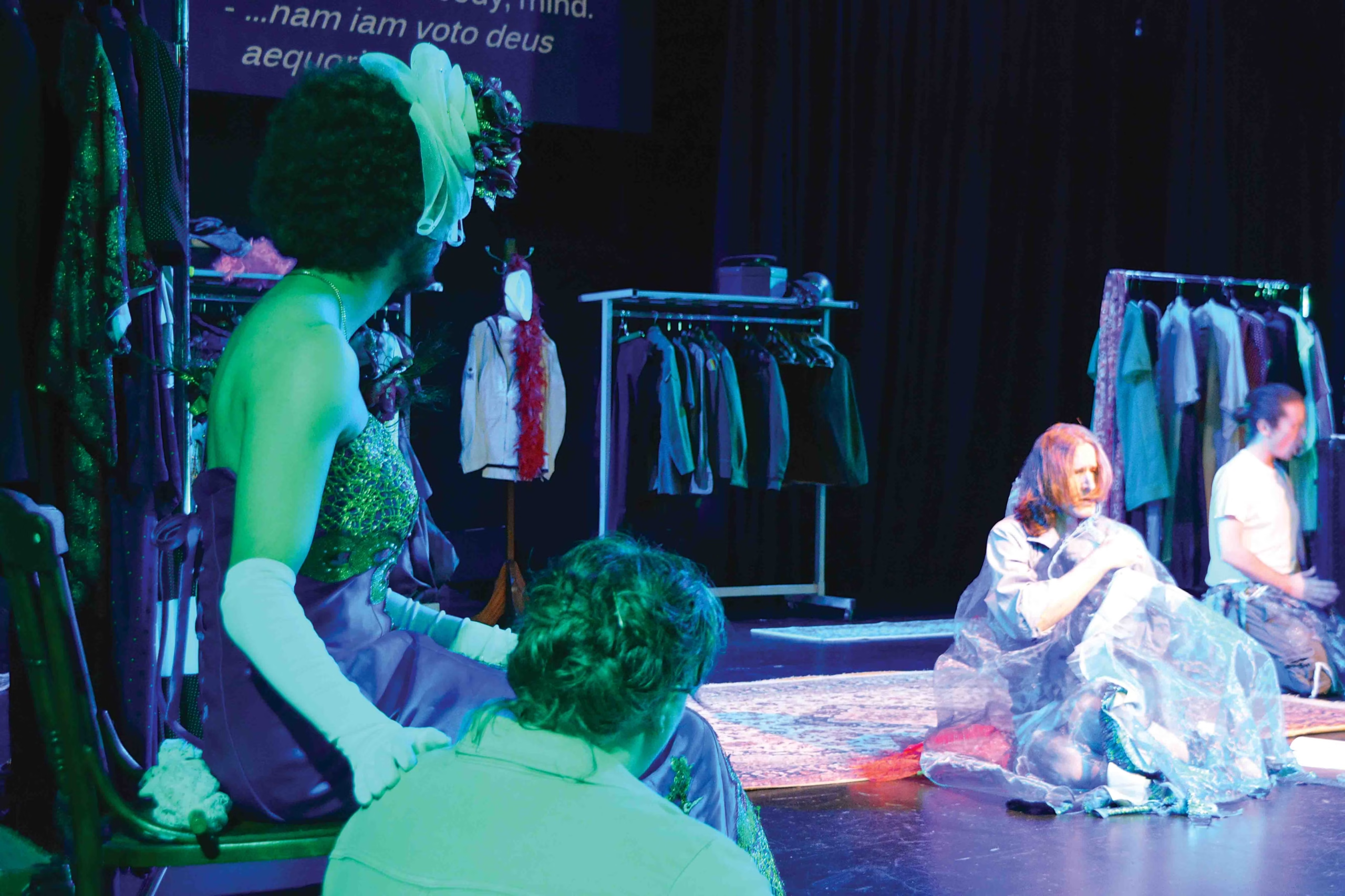
On June 5, 2026, the Registry Theatre presented Madame Caeneus’s Canteen, a chamber opera highlighting queer history and the beauty of transformation.
Co-produced by Luke Hathaway and lead actor Daniel Cabena, the performance was inspired by two poems written by Hathaway in his book, The Affirmations, that were brought to life by the musical talent of James Rolfe, composer of the score. The opera follows two intersecting character arcs: Bird, played by Cabena, and Remi, played by Lesley Emma Bouza.
Set in 1940s America, the production explores a time when cross-dressing was seen as a form of entertainment rather than gender expression. Within this world, a group of queer performers and soldiers explore their true selves in a society that refuses to accept them.
Much of the dialogue is raw, depicting moments of joy and celebration, as well as the vulnerability and dangerous reality of being transgender. Hathaway drew from his own relationships, grounding the story in real experiences of queer people.
“There are moments in the show that are close to the bone. But it can be really healing, because you start telling a story that is your own, and, in the telling, you realize it’s also a story that can relate to the community,” Hathaway said.
Hathaway said he hopes audiences will go forth feeling transformed.
“This story began as a celebration of the lives of my queer ancestors, but I’m telling it during a time in which queer lives in the United States are being criminalized again,” Hathaway said. “We’ve always been here and always will be.”
A major component of the show was found in its stellar visuals, with the fashion directly linked to the progressing story. Costume designer Rachel Kaufman Behling, the artist behind the fashion of the show, prioritized the exploration of identity in her process. Colour was a major source of inspiration, she said.
“I recognized that with a show like this, it’s about play. Playing with certain colours, textures, designs and that sort of thing,” Behling said.
Behling brought several racks of clothing into rehearsals, working with performers to configure outfits and shape each character. Each look is highly personal to the performer, adding a layer of realism to the production.
She also described the closeness she felt to the character of Lucy, the owner of Madame Caeneus’s Canteen.
“It was a labour of love, and I believe that’s what Lucy would have done. Anything that she would have put into her patrons, people coming in wanting to express who they are, I believe Lucy would go out of her way to help them become the magic that they are,” she said.
Despite a relatively low budget, the team said limitations became a source of inspiration.
“Scarcity is an invitation to be clear about what’s important,” Cabena said.
Cabena also described the chemistry between the cast, which played a major role in the atmosphere this opera creates.
“We’re settling in a little more to our sense of the whole story. I was interested in how fluid the listening felt, just a sense of where our shared attention is, how that movement of attention is across the stage. I was impressed with how good that flow was,” he said.
After four years of development, Hathaway said he felt glorious seeing the culmination of the work come together.
“There are safe, affirming places. And they’re precious when you find them,” Hathaway said.
The performance earned a standing ovation.




Leave a Reply