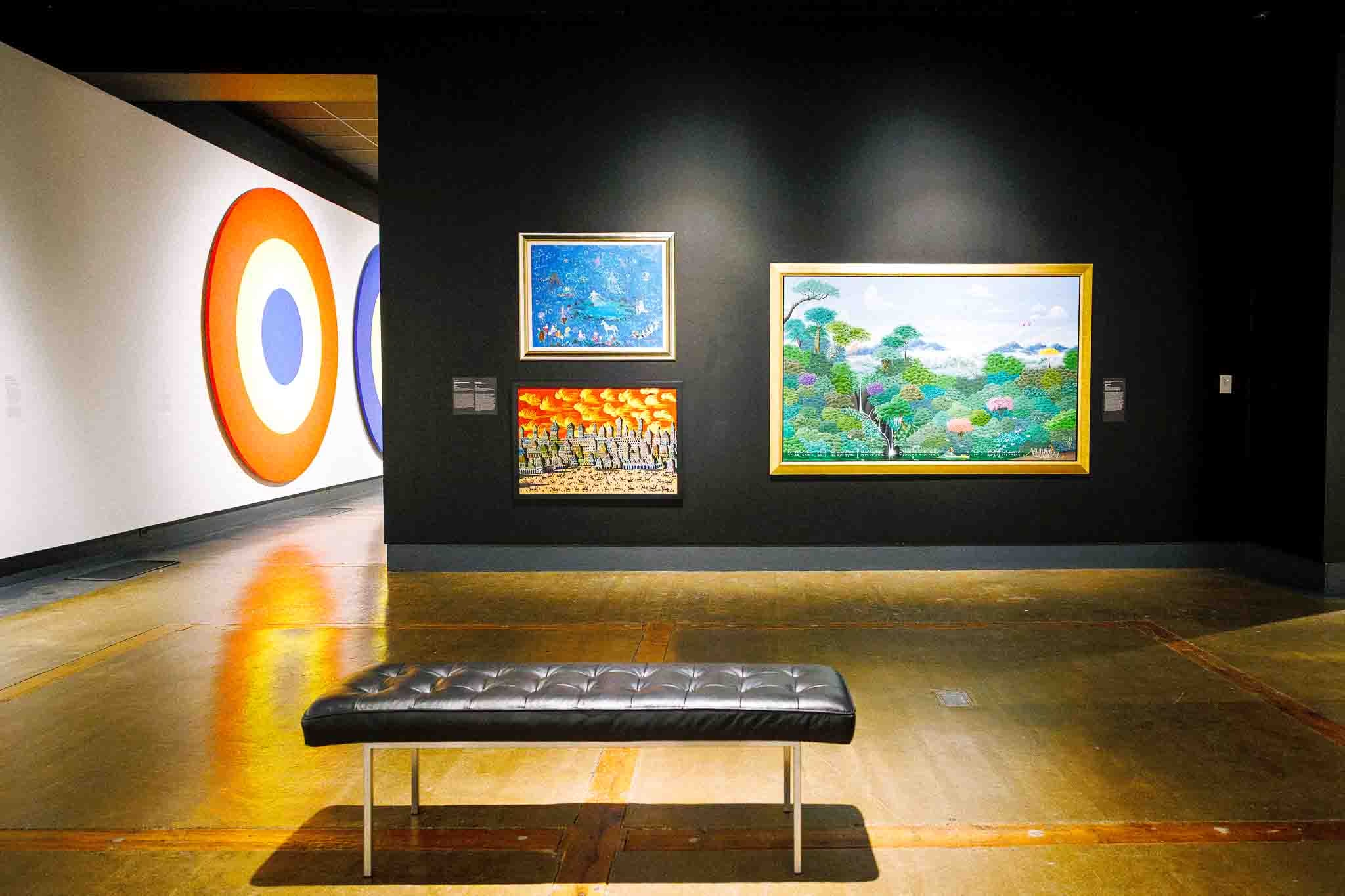

The Kitchener-Waterloo Art Gallery (KWAG) is celebrating its 70th anniversary this year with a series of events and exhibitions. The gallery has one of the largest permanent collections of contemporary art in Canada, and its staff have curated Sharing the Passion: 70 Years of Building the Collection to celebrate the gallery’s anniversary.
The exhibition, which opened on Mar. 14 and runs through July 19, 2026, features work selected from its collection of 4,408 pieces from artists including Pablo Picasso, Adad Hannah, Dondi White and Deanna Bowen.
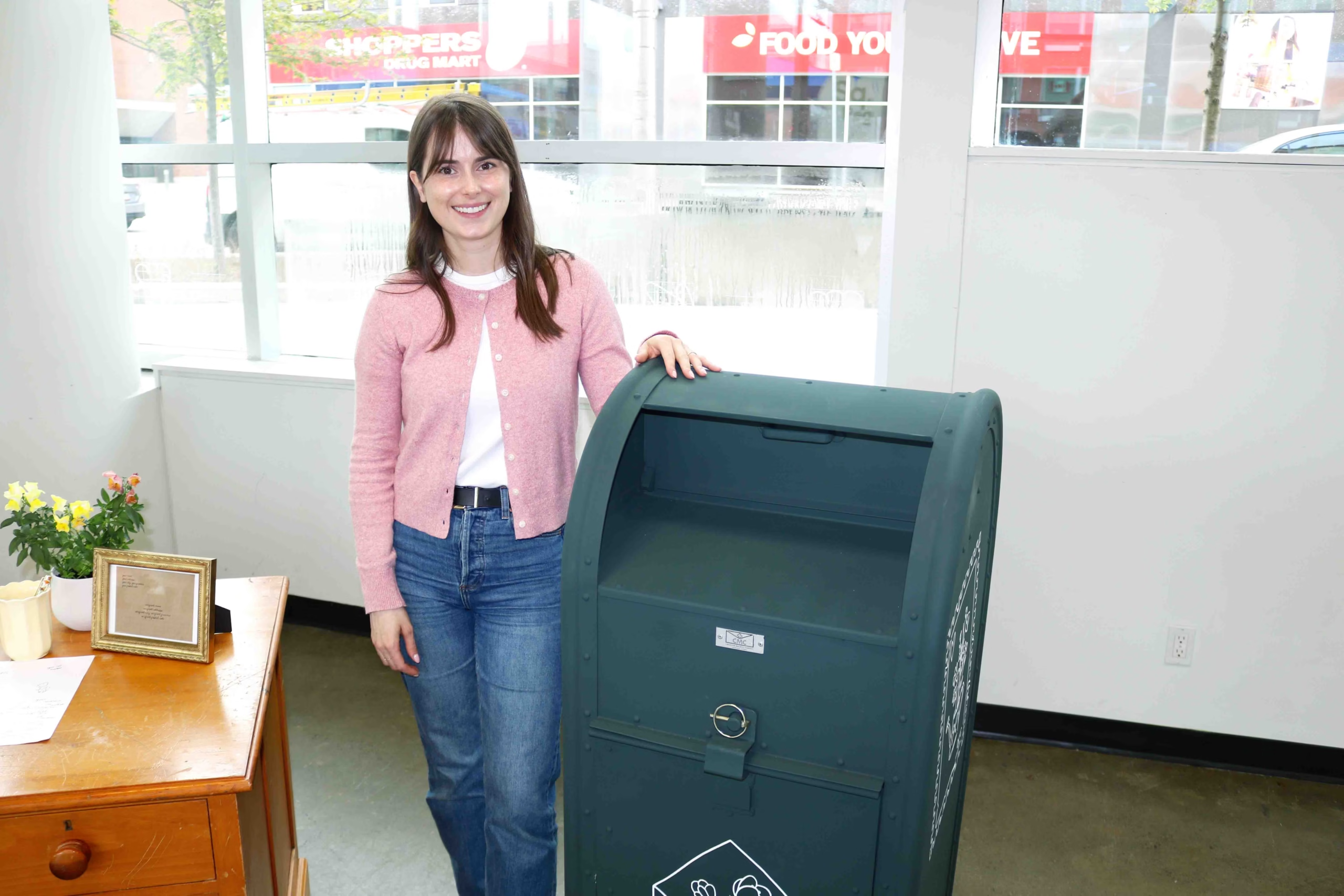
Jennifer Bullock, KWAG’s registrar and assistant curator, said the gallery’s mission is to collect work that is being created today and keep it for posterity. The gallery collected its first pieces in 1957, one year after its opening.
“As a contemporary art museum, we want to give the public a chance to see what is possible in human ability,” Bullock said.
Contemporary art is defined as art created by living artists. While some galleries and museums define the contemporary art era as starting in the 1970s, others like KWAG consider pieces created after 1945 to be contemporary.
Sharing the Passion includes pieces from every decade since the gallery began collecting. The exhibition itself is divided into six sections, from photography and photorealism to art from underrepresented and diverse voices. Many of the pieces were donated by the artists, including Adad Hannah and Deanna Bowen, who had exhibitions at the gallery in 2019 and 2020, respectively.
Áine Belton, the gallery’s manager of marketing and communications, recalled an example of an artist granting the gallery the right of first refusal on the acquisition of one of his pieces that are so eagerly sought by private collectors that they rarely reach public view.
“Billy Gauthier finished A Beautiful Struggle on site and we had the right of first refusal on it. A collector came in on the opening night of his exhibition and tried to give him a blank check for this. There are so many intimate stories that are caught here, not only into the artwork, but the individual,” Benton said.
The gallery was housed in a repurposed bicycle shed behind Kitchener Waterloo Collegiate Institute from 1956 to 1968, and then a converted church meeting hall on Benton St. from 1968 until it moved into the purpose-built space inside 101 Queen St. N. in 1980. The gallery’s basement was converted into specially built storage for its permanent collection.
Bullock said the collection was able to grow as the gallery’s space grew. Today, the largest pieces in the collection are Claude Tousignant’s Bleu, jaune, rouge, two nine-by-nine-foot circular canvases.
“When we moved in 1980, we didn’t quite have 400 artworks. The biggest thing we owned at that point was a canvas that was maybe five feet by four feet,” Bullock said.
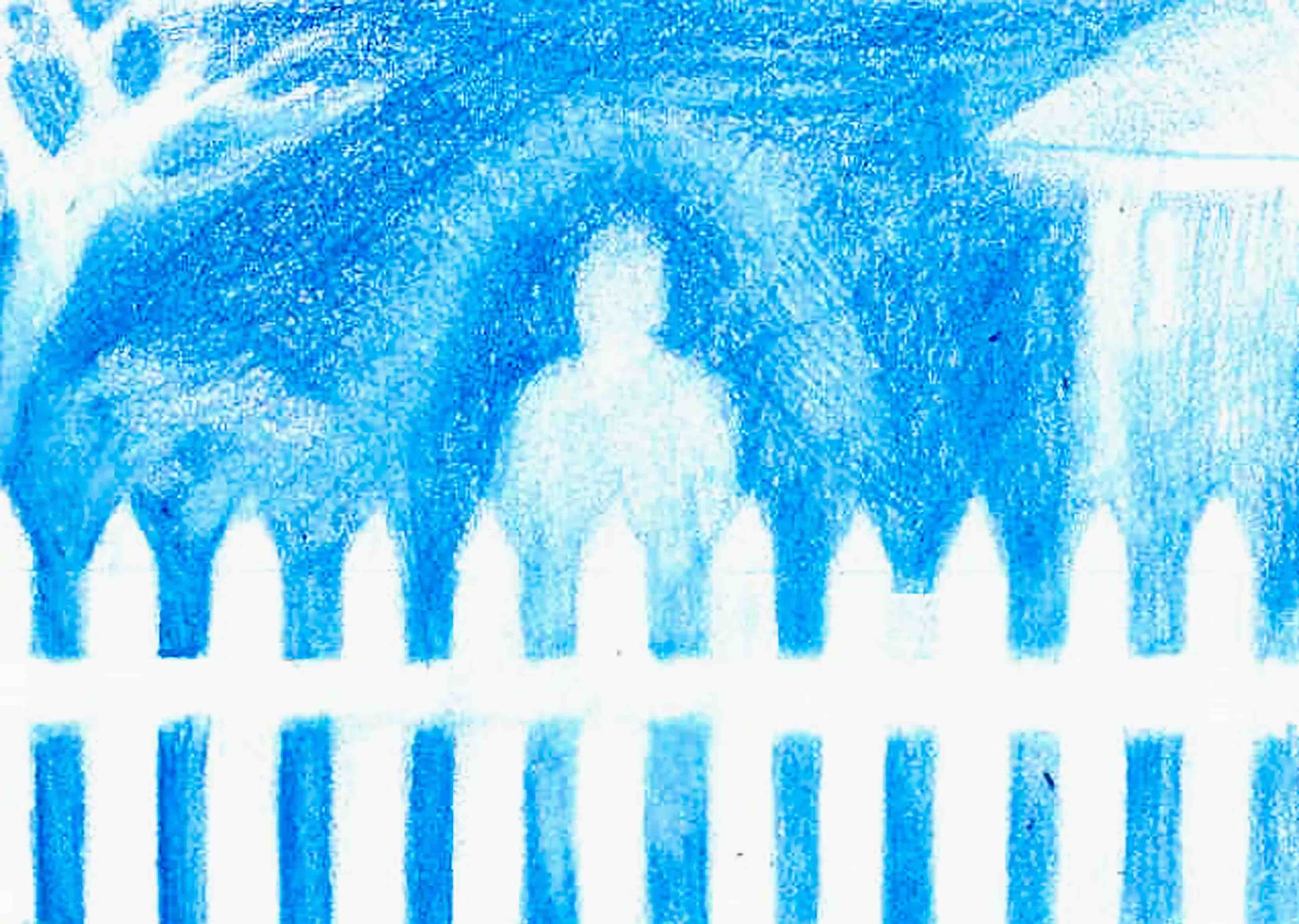
While the permanent collection represents artists from around the world, there are also strong local connections. The gallery commissioned a series of works from Canadian photographers titled Parochial Views in 2005. The exhibition was meant to capture the artists’ impressions of Kitchener as a survey of time, space and people. The images range from the 1960s-era circular parking garage on Duke St. to the old reflecting pond in front of Kitchener City Hall.
“There are nine of them in total, and each one of them is somebody’s impression of Kitchener. They are a survey of time, space and people,” Bullock said.
As pieces in the collection age, Bullock said the gallery has an opportunity to add modern context to the artwork and artist. As new information on artists is learned, gallery staff can use that information to shape how exhibits are curated and works displayed.
“You can’t relieve the past, but you can add that information to future understanding,” Bullock said.

Leave a Reply