
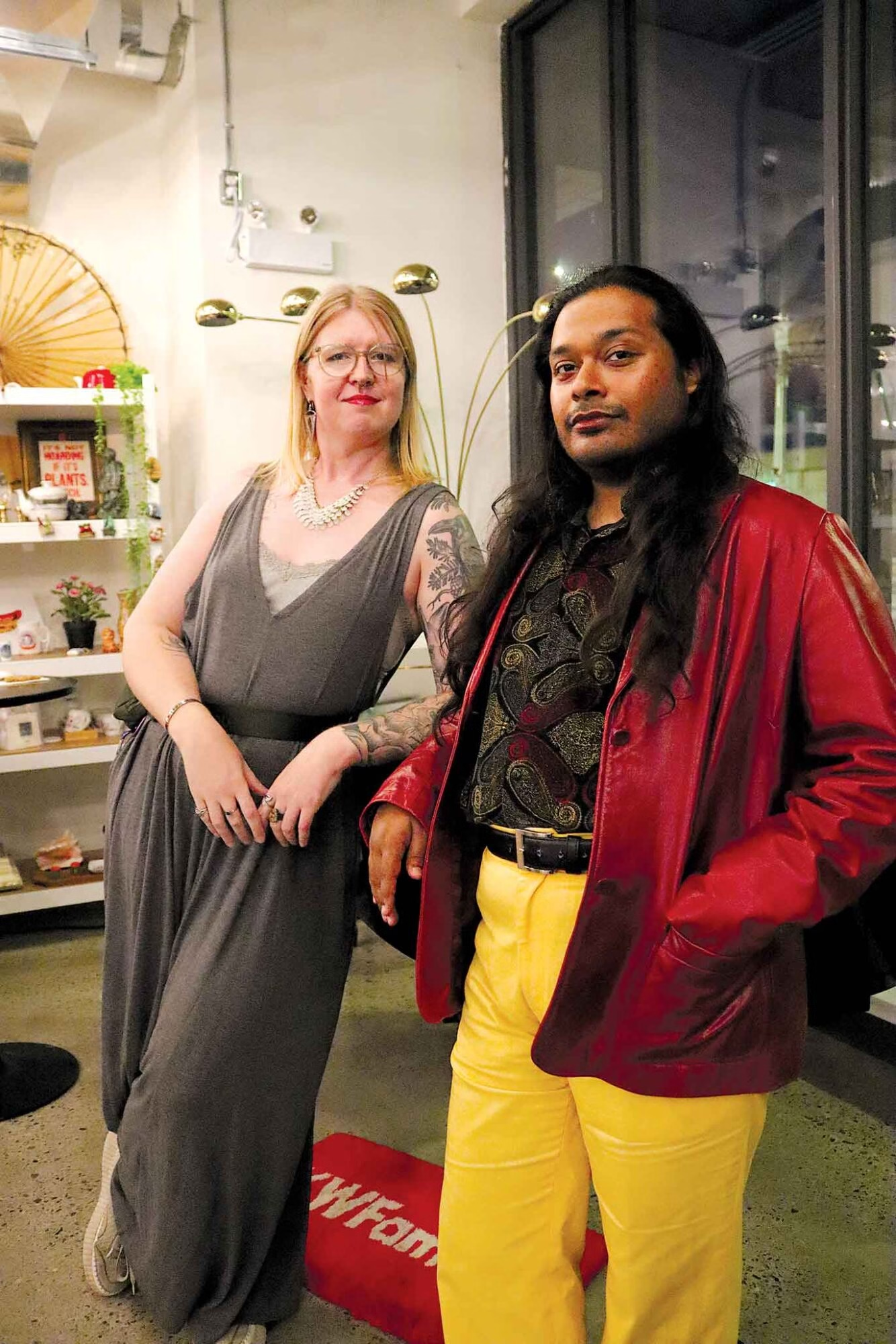
Over the weekend of Oct. 23 to Oct. 25, 2026, Spectrum, Waterloo Region’s rainbow community space, hosted the Rainbow Reels 2SLGBTQIA+ Film Festival, marking the newest iteration of the long-running film festival. The festival opened Friday night, with a party at KW Famous Creative Cafe and a screening of the documentary, Larry (they/them) about non-binary photographer Laurence Philomène.
Numerous film screenings, workshops and community conversations took place at the Kitchener Public Library’s Central Branch. The films ranged from older releases like 2012’s family-friendly ParaNorman to At the Place of Ghosts (Skɨte’kmujue’katik), a 2025 Indigenous Canadian horror/drama film. Saturday afternoon kicked off with a collection of short films that extended into the evening, with a screening of Pink Light by filmmaker and actor Harrison Browne. In partnership with Sexual Assault Support Centre (SASC), Browne also led a panel, alongside collaborators from the film, on sports and masculinity using his experience as the first openly trans former professional ice hockey player.
Founded in 2001, the Rainbow Reels Film Festival began as a project of the Waterloo Public Interest Research Group (WPIRG) on the University of Waterloo campus. Until 2016 when their parent organization lost its funding, Rainbow Reels was entirely funded by WPIRG and had an average yearly budget of around $30,000.
As far-right ideology began to proliferate in the region in 2015, WPIRG was decried as a response to their advocacy for Palestinian rights and severing ties with UW’s Israeli partners due to their complicity in violating Palestinian human rights. In September 2016, a special referendum was held by Waterloo’s Undergraduate Student Association—at the time they were known as Feds / the Federation of Students—and students voted to remove the mandatory fee that funded WPIRG, and subsequently Rainbow Reels lost its funding.
Past organizers and volunteers did not want to see the festival end, so they transitioned to a community arts collective, relying on municipal and provincial funding to continue the festival. They partnered with local groups and kept the festival going until the Covid-19 pandemic began in 2020, with the last festival running in 2021.
After several years away, Spectrum brought Rainbow Reels back with funding from the Waterloo Region Arts Fund and local sponsors The Civil, The Branches Yoga and TWB Brewing. Spectrum’s Executive Director Suzie Taka coordinated the festival 14 years ago in 2012 and was hired as Executive Director in 2024. For Taka, the festival was foundational to discovering her own queerness and after getting hired, bringing back Rainbow Reels was always in the back of her mind.
“It was a big struggle for those years, even when the festival was running [post-referendum]. It’s hard to have something like that that’s not anchored to a bigger organization,” Taka said.
“Back then, it was one of the few annual queer events that Waterloo Region held. Even with all that we’ve added, I think there’s still a place for [the festival] and with how incredible our queer and trans arts scene is now, I hope that it can turn into a broader queer and trans arts festival.”
Spectrum received news about the grant in March of 2026 and started planning in July—after Pride season. In 16 weeks, they pulled together this festival with a quarter of the former budget. Festival Programmer, Aashay Dalvi, put a lot of care and thought into their selections for the 2026 festival. Using their experience and connections from volunteering at the Inside Out LGBTQ Film Festival, the Canadian Screen Awards and their extensive knowledge of Canadian queer history, Dalvi’s choices gave attendees a compelling range of films to watch. That was especially resonant with the short film programming which revolved around the theme of What We Inherit, What We Become.
“There has been a rise in queerphobia in general and contesting your own queerness. This was my attempt at inviting a conversation on queerness that is inherent and queerness that is inherited, and the power of queer history and archives that have led to our liberation now,” Dalvi said.
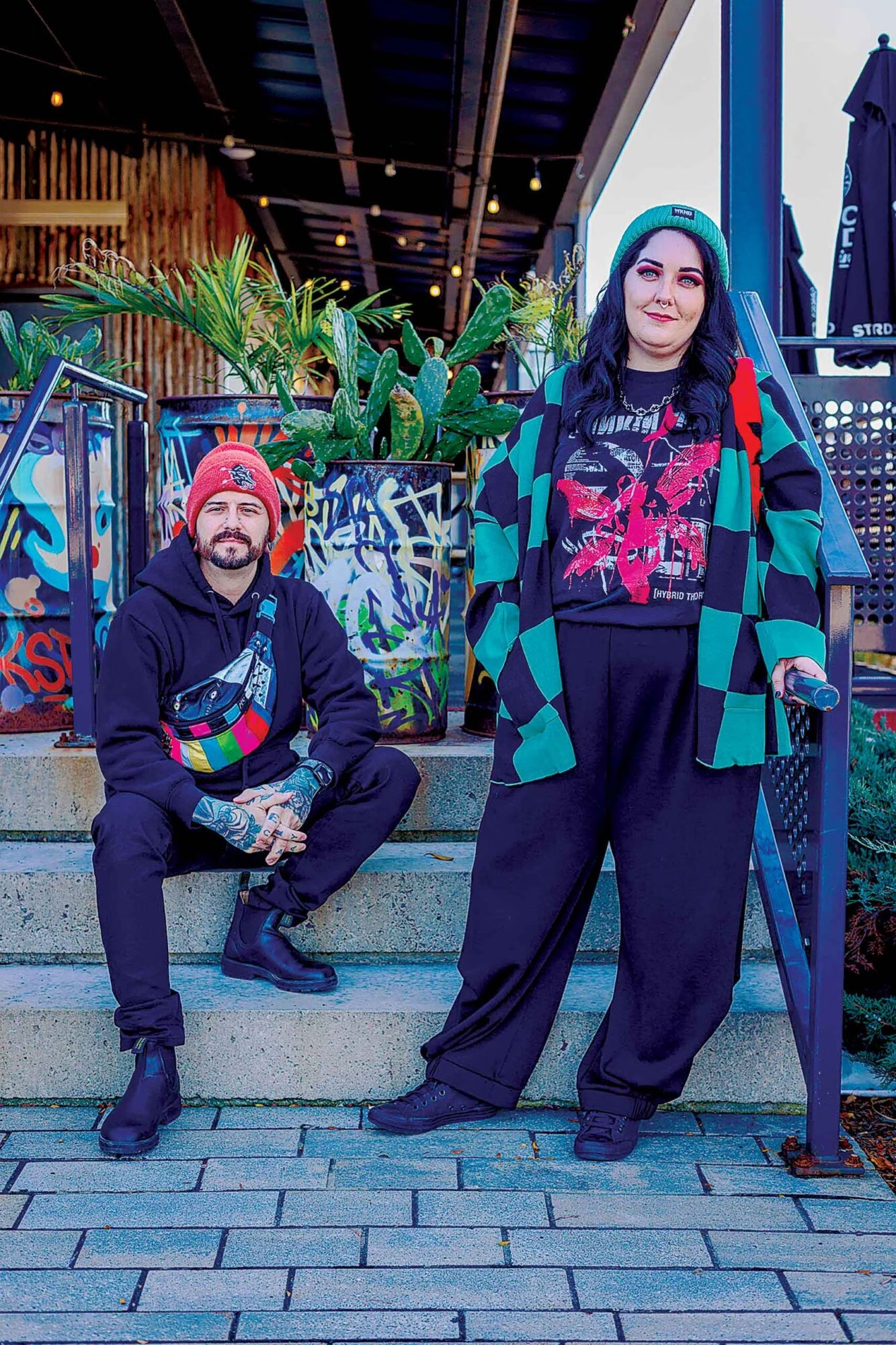
The festival’s Operations Lead, Emme Kay Kennedy, echoed Dalvi’s sentiments. She emphasized that Spectrum’s programming is very diverse and dedicated to supporting a wide range of folks under the 2SLGBTQIA+ umbrella, and that the films Dalvi curated spoke to a wider audience range than just English-speaking white binary queer folks living in North America.
“Films are not just rational devices, they’re aesthetic, they’re speaking to something bigger. We are all in acts of translation with each other all the time as queer people. There’s no understood language for us already, apart from the one we create ourselves,” Kennedy said.
In a time of ever-growing divisiveness, Rainbow Reels offers a space for folks to feel seen and to interact with narratives that reflect their truths on the big screen. And for those without those specific lived experiences, it offers a window into worlds different but not entirely dissimilar from their own.
“As queer folks we have all experienced oppression, suppression, dehumanization and disrespect of some kind, at some level. It does not mean that we are not worthy of our own liberation, just because we’re not speaking the same language,” Dalvi said.
We’ve felt the same discomfort, the same disrespect. I wanted to curate a collection of films where it doesn’t matter what language you speak. Queerness is the language that binds us all.”

Leave a Reply