

The first divination method I encountered was coffee cup reading. Growing up in a Greek-Cypriot household, you always knew someone who knew someone who could read a cup.
Tasseomancy, the art of interpreting the shapes left behind by beverages after drinking, is a practice that stretches back to ancient civilizations.
The version I grew up with—reading the thick, sandy residue of Turkish coffee—did not emerge until the 1700s, when the Ottoman Empire began importing coffee from Yemen.
The story goes that Sufi monks first used coffee to stay awake during long meditations. Sufism, a mystical branch of Islam, embraced coffee as a tool for spiritual endurance. When the Ottomans adopted coffee, it moved from a monastic aid into a social ritual.
Coffeehouses bloomed across the empire, becoming hubs of conversation, poetry, politics and, eventually, divination. From there, both the drink and the practice of reading its remnants spread throughout the Mediterranean, where it wove itself into the fabric of daily life.
The Venetian and, later, Viennese, coffee cultures which shaped European café society and eventually influenced North American coffee culture originated in this tradition. The small cups, the slow sipping, the communal reprieve in the day all evolved the café into a place for intellectual exchange.
As I grew more interested in divination tools, I naturally became curious about the coffee cup readings I remembered from childhood. But when I began searching for more information, I was surprised by how little written material existed about this method.
That’s when I met Beril Çakıroğlu.
Beril is a Turkish-born Canadian who lives here in the Waterloo Region. I found her while searching for resources on coffee cup readings and learned that she is one of the few people in the area practicing this art professionally.
Before she offered readings professionally, the practice was simply part of her life.
In Turkey, she told me, it was a common ritual. The youngest person present was usually responsible for making the coffee and, after everyone finished drinking, the group would read each other’s cups. It wasn’t a fringe practice—it was common knowledge, a cultural practice as natural as sharing a meal.
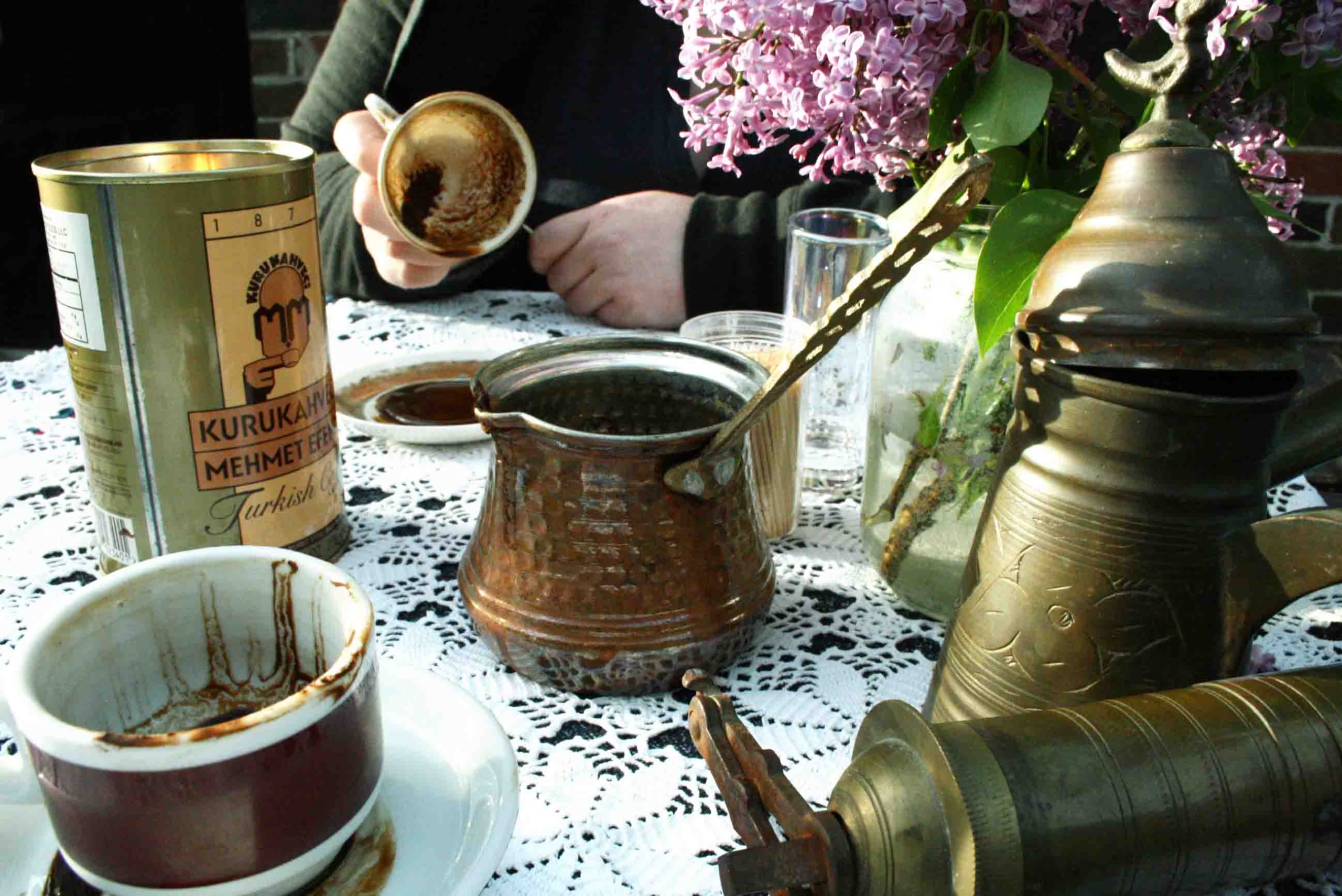
Turkish coffee cup reading, kahve falı, is a ritual that begins with grinding the beans and setting intention in the process. When Beril came to my home to read my cup, she brought her hand grinder with her: a small brass cylinder with a winding lever.
The coffee is brewed in what I grew up calling a briki and Beril calls a cezve, which is a small, wide‑bottomed, narrow‑necked copper pot with a long handle that brews the coffee on a stovetop.
Once the coffee boils over, it’s poured into small cups and served with water. Because the grind is so fine, thick sediment settles at the bottom, which is not for drinking.
Instead, when only a small amount of liquid remains, you swirl the cup clockwise three times, place the saucer on top, flip it over, and let it dry. As the grounds drip down the sides, they form shapes that become the symbols of the reading.
Different cultures interpret these symbols differently. The way Beril reads a cup is not identical to the way I was taught as a Greek-Cypriot, but the heart of the practice is the same: a shared moment of connection, reflection and meaning-making.
She also told me that a coffee cup reading is said to last forty days. After that, you gather again, drink again, and read again. The ritual becomes a cycle of shared moments of reprieve accompanied by divine insight.
I asked Beril to offer a collective reading for the next couple of months, she studied the shapes inside the cup.
She said we are entering a period of emotional tension and overwhelm, waves of these feelings may continue for about forty days. Despite this, the cup shows a strong path forward: a thick line of grounds rising toward the rim, indicating progress.
The message, Beril said, is not to get lost in the small mistakes or distractions along the way. The emotional waves around the path may blur clarity, but they do not block movement. This is a time to choose a desire that feels strongest and leans into it with patience.
Some unresolved pieces may need to be ignored for now; they will sort themselves out in time, she said.
Interestingly, she noted the absence of human figures in the cup, suggesting that the external world will have less influence than the inner one. This is a period of introspection, intuition and connection to the subtler layers of experience.
Since meeting Beril, we’ve continued to gather every forty days, sharing different divination practices over coffee. What I’ve come to appreciate most is not just the readings themselves, but the relationship they create.
These rituals remind us that meaning is often made together. They are emotional threads that weave us into one another’s lives and tether us to something greater than ourselves.
Beril conducts professional coffee readings across southwestern Ontario and is currently gathering research in hopes of creating a more thorough, documented history of this method. You can find her work and follow her journey at berilsreadings.com.

Leave a Reply