



From the buzz behind Caitlin Clark’s signature logo-threes, to the excitement behind the Toronto Tempo’s first tip-off next year—women’s basketball has seen unparalleled growth over the last year.
From Hayley McGoldrick’s perspective, a HoopsHQ basketball writer, the shift started when the Women’s National Basketball Association (WNBA) started receiving air time on TV, providing visibility for basketball fans to watch at home.
“I think everybody is going to point fingers towards Caitlin Clark and that boom. But for somebody who’s been covering the league since 2020 it’s been happening steadily for a while, and the biggest thing is visibility and accessibility,” McGoldrick said.
The momentum continued as the Scotiabank Arena saw a sold-out stadium for a WNBA Canada Game in 2023.
“Having a game that people can go to and actually physically see the product on the court, that has just been so massive for the league and for the growth of women’s basketball,” McGoldrick said.
With the Toronto Tempo, the first ever Canadian WNBA team, getting ready for their first season in 2026, basketball fans around the country will have an opportunity to follow and root for a home team.
“There’s going to be women’s sports fans who never watched basketball and now they’re going to become Tempo fans just because of the fact that it’s another women’s team that they can support,” McGoldrick said.
With increased visibility, women of all ages interested in the sport will be able to find female role models in an otherwise male dominated industry.
“I think it’s definitely going to inspire kids to to keep playing and model their game after a woman. Instead of kids who want to shoot like Steph Curry and dunk like LeBron,” Laura Vere, Wilfrid Laurier University women’s basketball assistant coach, said.
“Now it’s what if I shoot like Caitlin Clark, or what if I master my drop-step move like Cameron Brink or Aaliyah Boston,” Vere said.
Approximately 50 per cent of young women drop out of sports by age 13 which can be attributed to both lack of accessibility and confidence.
McGoldrick and Vere both shared the sentiment that, in having more visible role models, the basketball industry will have a domino effect in encouraging more women to compete and play the sport at all levels—especially young women.
“I think that grassroots level is huge, because that’s a how we breed the next generation of WNBA players but also just keeping kids in sports…I don’t really even know where I’d be in my life if I never played sports,” McGoldrick said.
McGoldrick, who played for the Waterloo Wild Hawks at the age of 14, said her team had to fold that year due to low interest. In contrast, today young women find more opportunities to play due to increased interest, better funding and opportunities to learn.
While women’s basketball has been booming on a national and global scale, there’s still work to do on a municipal level.
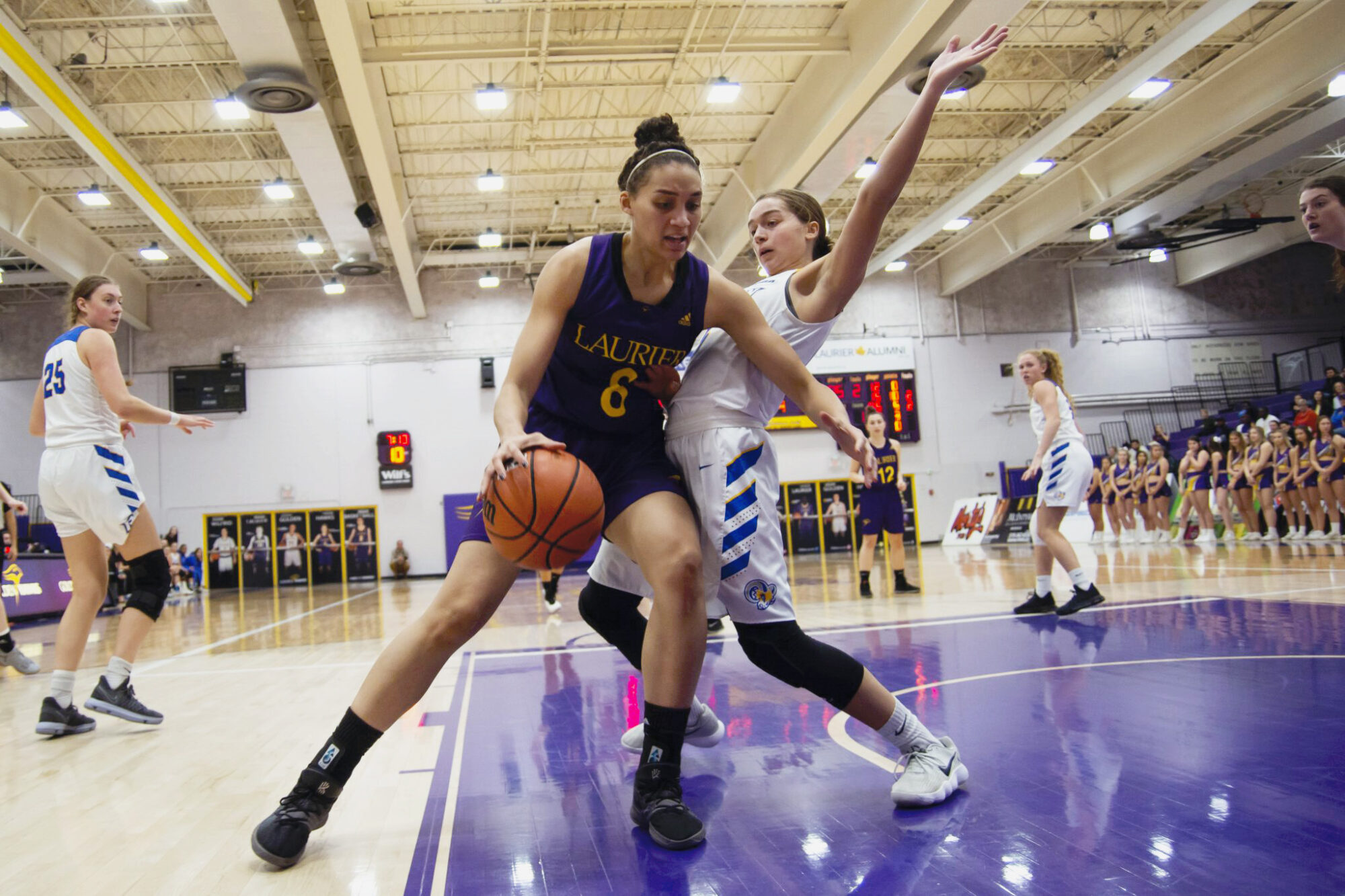
While the Laurier men’s basketball team often sees a packed stadium, Vere said the Laurier women’s team has yet to see the same attention and excitement. When it comes to opportunities to watch local, competitive basketball, Vere would love to see the broader community view the Ontario University Athletics (OUA) level as high-level basketball.
“When you look at the quality of sport in the OUA and especially women’s basketball, it’s good basketball…but I don’t know if people really look there,” she said.
On the court, there’s also room for growth in the Waterloo region to expand opportunities for adults to play.
For Vere, who first played in a Waterloo women’s league before the pandemic, said the league never restarted up due to lack of interest. While adults have few local options to play in co-ed and women’s leagues, Vere noted a gap for adults looking to play at a competitive level above recreational.
Many of the seniors playing for Laurier’s team, for example, are limited in their ability to continue playing at a competitive level outside of professional sports teams.
“When you play at a high-level, you don’t really want to go play at a lower level recreationally,” Vere said. “If you’ve never played basketball before … you don’t really want to play against an OUA all-star in rec league.”
As growth in women’s basketball continues to steadily increase, McGoldrick and Vere were both hopeful that growth at a municipal level will continue to follow, noting the importance of women representation in all sports.
“Sport brings so much joy and so many learning experiences to people’s lives. I love sports, and I really want girls especially to keep playing sports. It means so much to me and it’s done so much in my life—I want people to see what it can do for them because it’s only great things,” Vere said.
Hayley McGoldrick is a WLUSP Alum.

Leave a Reply